Milk fever and hypocalcaemia can largely be prevented with correct nutrition.
At calving, the cow's calcium demand increases dramatically with the onset of colostrum production. The PTH and active Vitamin D axis that regulates calcium balance cannot meet this sudden demand quickly enough. Clinical milk fever affects approximately 5% of herds; subclinical hypocalcaemia with no visible signs is observed in 30–50% of high-yielding herds and lays the groundwork for retained placenta, metritis (uterine inflammation), displaced abomasum (twisted stomach), ketosis, and early lactation mastitis (udder inflammation). When the direct and indirect cost of each case is calculated at 300–500 USD, annual losses in a herd of 50 cows reach tens of thousands of dollars.
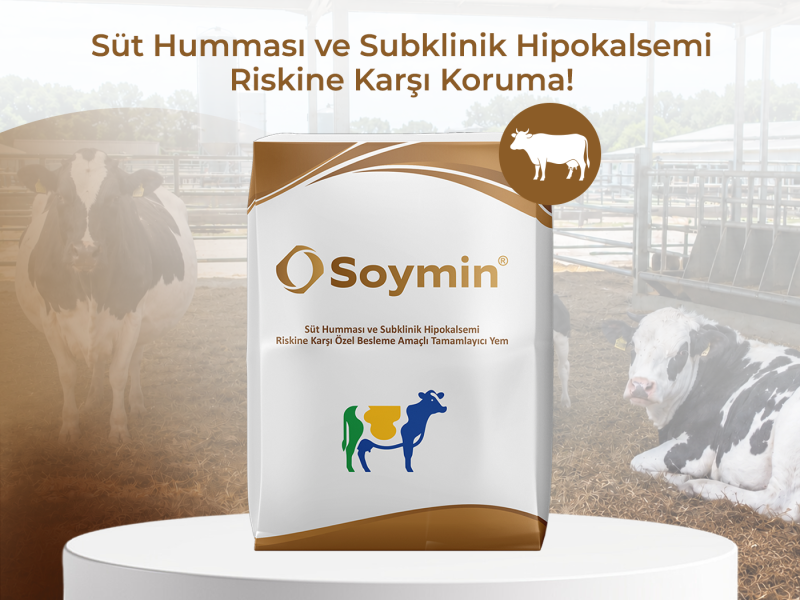
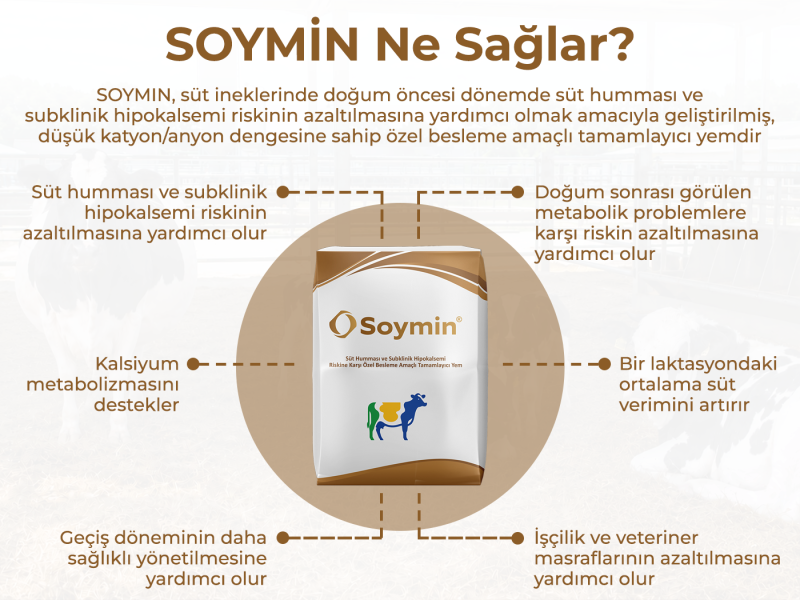
Reduce the risk of hypocalcaemia and milk fever with Soymin® — and protect your bottom line!
Mechanism: Negative DCAD → Metabolic Preparation
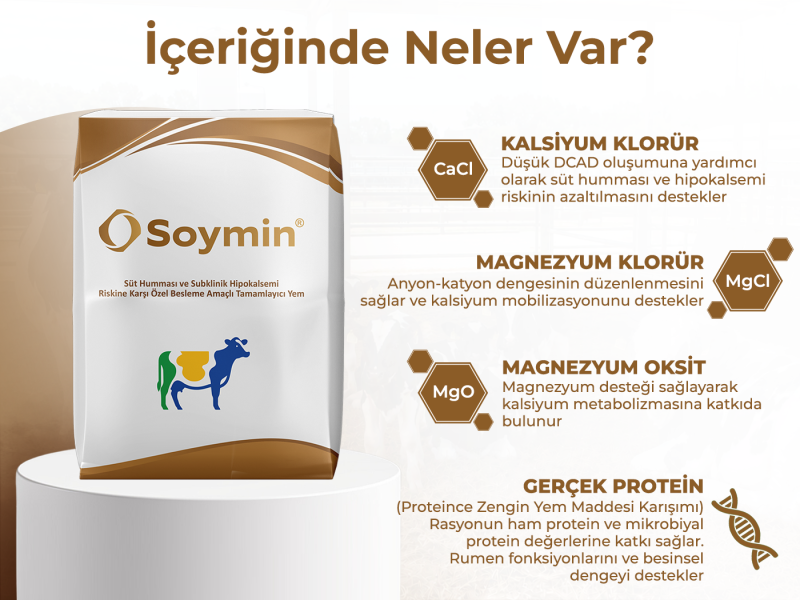
When Soymin®'s DCAD value of −2,758 mEq/kg is added to the ration, it induces compensated metabolic acidosis. This mildly acidotic environment triggers two critical adaptations: PTH receptor sensitivity increases and active Vitamin D (1,25-dihydroxyvitamin D₃) activation accelerates. The cow arrives at calving fully prepared for calcium mobilisation — bone resorption activated, intestinal Ca absorption increased, and the risk of hypocalcaemia significantly reduced.
Impregnation Technology — Palatability Preserved
The biggest problem with conventional anionic salt mixtures is palatability: due to taste impairment, animals eat selectively; dosing becomes inconsistent and efficacy declines. Soymin®'s impregnation technology binds the anionic components to the carrier matrix — no ammonia, no segregation, no unpalatability. Dry matter intake is preserved and the dose is reliably consumed.
19% Crude Protein — Dry Period MP Support
Soymin® contributes to dry period metabolisable protein requirements with 19% crude protein content. The vast majority of competing anionic products use non-protein nitrogen (NPN) sources or contain no protein at all. Soymin® closes this gap with a genuine protein source.
Efficacy Monitoring with Urine pH
The efficacy of the Soymin® programme can be easily monitored through urine pH measurement. Target range: 6.0–7.0 (6.5 for Holstein, 6.0 for Jersey). If pH falls outside this range, the dose is adjusted — the programme is transparent and controllable.
To protect your herd against milk fever, subclinical hypocalcaemia, and transition period diseases, start Soymin® 21 days before calving.