The Molecules That Break Mycotoxins' Game
Performance is dropping, feed intake is fluctuating, milk fat is inconsistent — but the diagnosis never quite fits. This pattern is often the signature of subclinical mycotoxicosis: a silent, insidious loss advancing behind the mask of other conditions.
Mycotoxins are secondary metabolites produced by various mould species. Aflatoxins, Ochratoxin A, Fumonisins, Zearalenone, Trichothecenes, and Penicillium toxins persist silently across feed raw materials — from grains and oilseed meals to silages and hays. Field studies demonstrate that 40–60% of raw materials are co-contaminated with at least two different mycotoxins simultaneously. In ruminants, this is particularly insidious: fluctuating feed intake, disrupted rumen fermentation, and milk fat depression — all frequently misread as acidosis or a nutrition error.
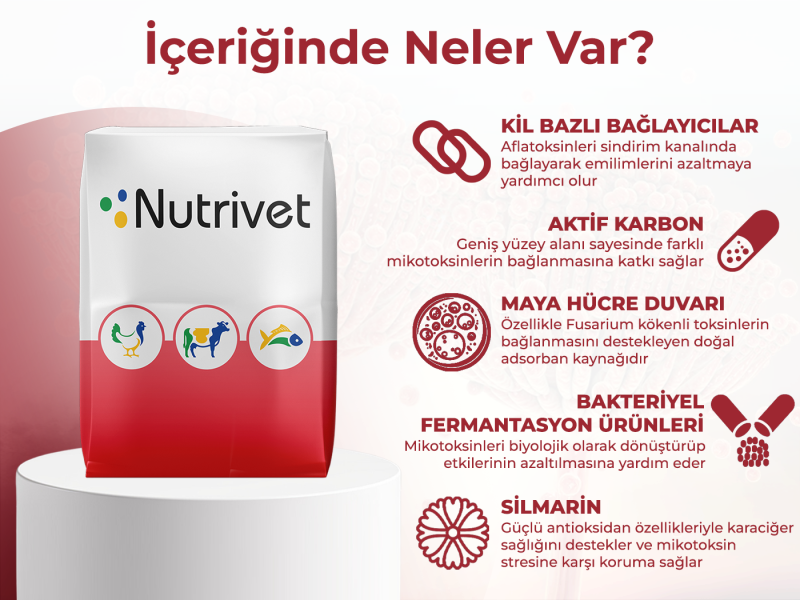
Five-Layer Protection. One Product.
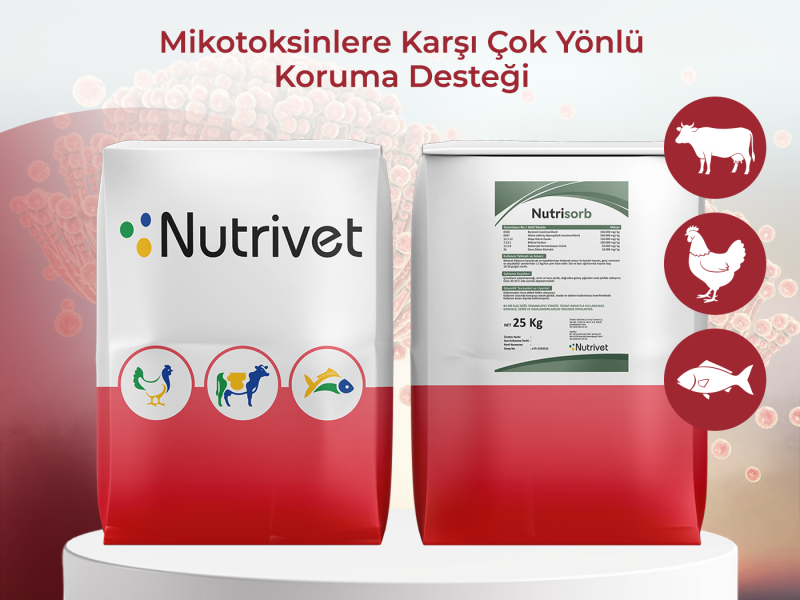
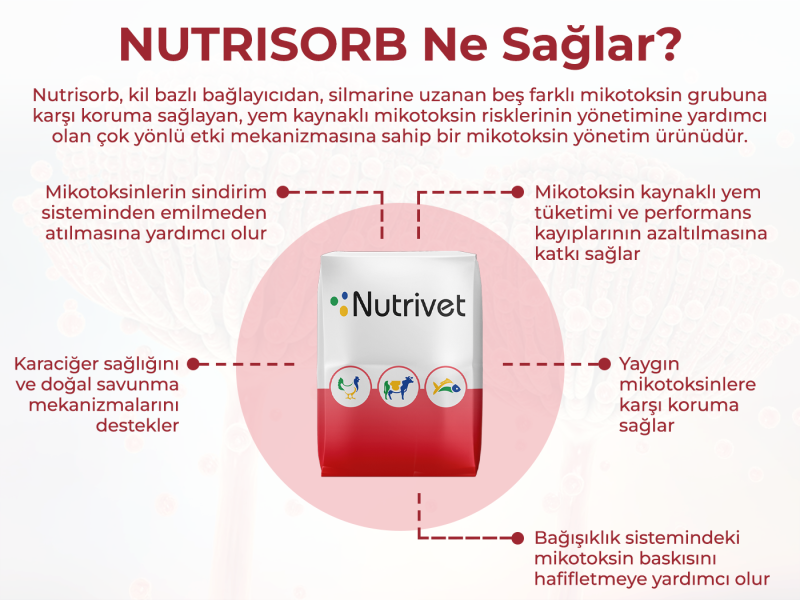
Nutrisorb® does not address this threat with a single mechanism. Instead, five complementary systems work in synergy:
Clay-based binders adsorb aflatoxins in the gastrointestinal tract through their microscopic crystal structure, preventing passage into the bloodstream. Research demonstrates that the aflatoxin B₁ binding capacity of high-performance clay minerals is significantly greater than that of conventional bentonite-based products.
Activated carbon, through its exceptionally high surface area, effectively binds not only aflatoxins but also OTA, DON, T₂, ZEA, and FB₁ — providing critical coverage for Fusarium-derived toxins where clay minerals alone fall short.
Yeast cell wall components selectively bind OTA, DON, T₂, ZEA, and FB₁ — particularly those produced by Fusarium species. The role of beta-glucans in mycotoxin adsorption is supported by numerous in vitro and in vivo studies.
Bacterial fermentation products act through biotransformation: toxins are not merely bound, but chemically broken down into non-toxic metabolites and eliminated via faeces. This mechanism is particularly important for polar toxins where clay binders are insufficient.
Silymarin protects the liver at a second line of defence. Through its antioxidant and anti-inflammatory properties, it limits hepatic damage caused by mycotoxin exposure and supports liver regeneration. The hepatoprotective effect of silymarin, derived from Silybum marianum (milk thistle), is well established in clinical research.
The outcome: Six mycotoxin families — Aflatoxins, OTA, Fumonisins, ZEA, Trichothecenes, and Penicillium toxins — addressed in a single formulation, through five distinct mechanisms. Bind, transform, protect.
To protect against the invisible threat in your silage and manage mycotoxin risk across your herd, use Nutrisorb®.